Spa-Worthy Bathroom Makeover: Design a Rejuvenating Master Bathroom That Feels Like a Luxury Resort
The master bathroom of 2026 is not a utilitarian room — it is a personal spa, a daily ritual space where the pressures of the outside world dissolve in warm water, natural stone, and carefully composed tranquillity. From the freestanding bathtub positioned as a sculptural centrepiece to the rainfall shower that mimics a tropical downpour, this complete guide shows you how to create a bathroom of genuine luxury.
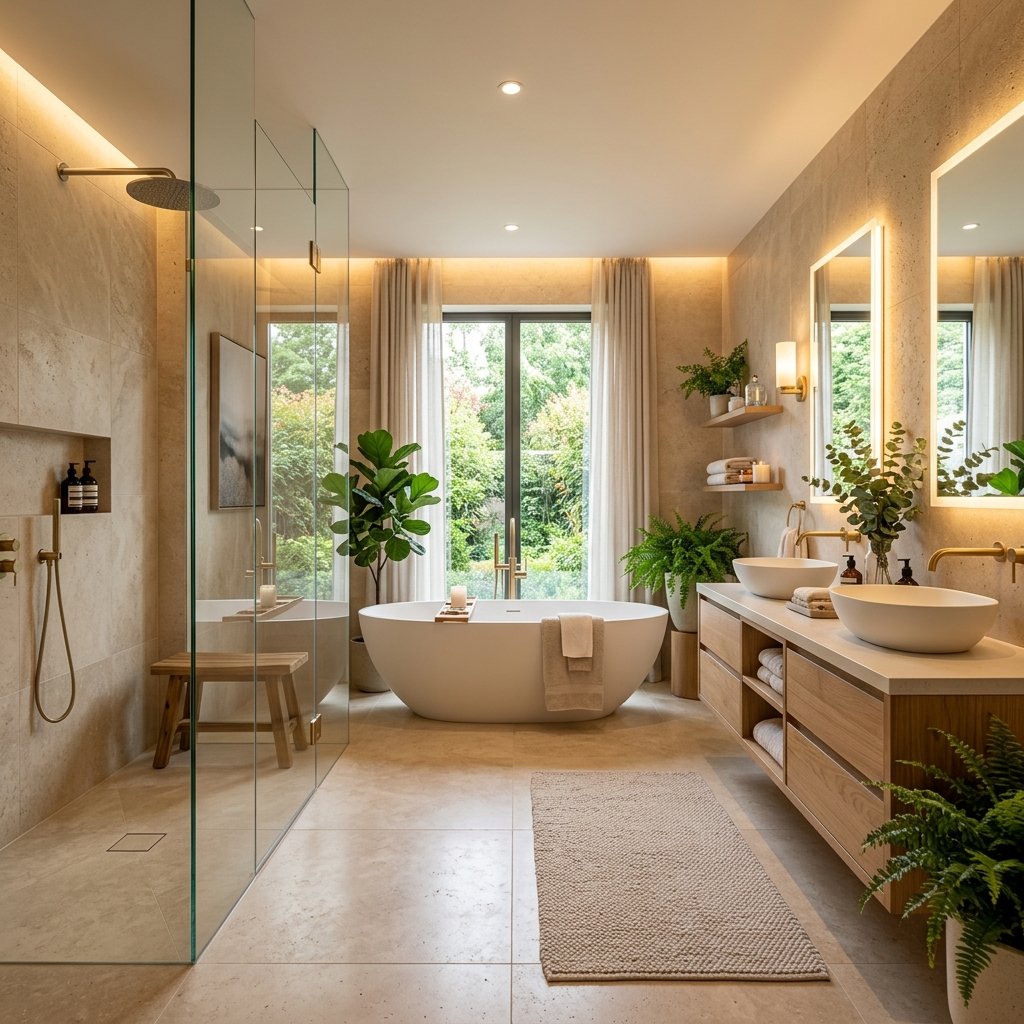
Table of Contents
The Bathroom as a Daily Ritual Space
The finest spas in the world — from the ancient Roman baths to the contemporary Japanese onsen, from the hammams of Istanbul to the thermal retreats of the Swiss Alps — have understood for millennia that the act of bathing, when conducted in a space of genuine beauty and quality, becomes a ritual of extraordinary restorative power. It is not simply the warm water that heals; it is the entire sensory experience of the beautifully designed space that enables the body and mind to release their accumulated tension.
In 2026, this understanding has finally permeated domestic bathroom design at the luxury level. The master bathroom is no longer designed primarily as a functional hygiene facility — it is designed as a personal spa, a private retreat of beauty and calm, a space in which the daily act of bathing becomes a genuine moment of self-renewal.
"The best bathroom I ever designed was one where the client told me she cried when she first used it — not from sadness, but from the overwhelming beauty of the space and what it felt like to finally have a bath that felt truly worthy of the time she spent in it."
1. Freestanding Bathtubs: Sculptural Centrepieces
The freestanding bathtub has become the most sought-after element in luxury bathroom design — a piece of functional sculpture that anchors the bathroom visually and elevates the entire bathing experience. Unlike built-in baths that disappear into their surroundings, the freestanding tub demands attention, positions itself proudly in space, and signals that this is a room where bathing is taken seriously.
Materials and Forms
The classic freestanding bath form is the oval or elliptical tub in a smooth composite material — typically stone resin or solid surface — which is warm to the touch, retains heat well, and is available in any colour from pure arctic white to deep charcoal. For the most dramatic statement, cast iron baths in an original rolltop or slipper design offer incomparable heat retention and a timeless quality that reads beautifully in both traditional and contemporary settings.
In 2026, the most coveted freestanding baths come from artisan manufacturers who cast their tubs in natural stone — travertine, limestone, and onyx bathtubs that are literally sculptured from the same material as the finest architectural surfaces. These represent a significant investment but create bathrooms that are genuinely incomparable in their material luxury.
Positioning and Plumbing
The freestanding bathtub should be positioned as a sculptural object in space — not pushed against a wall, but positioned so that it can be viewed and approached from multiple directions. The ideal position is centred on a window with a view, allowing the bather to look out onto the garden or landscape while submerged. Free-standing bath filler taps should be floor-mounted in brushed gold or polished nickel — wall-mounted taps undermine the sculptural quality of the freestanding format.
2. The Rainfall Shower: A Daily Luxury
The walk-in rainfall shower — an enclosure large enough to move freely within, with an oversized overhead rainfall head positioned to deliver water in a broad, even, gentle cascade — has become the defining feature of the luxury master bathroom. When properly designed and installed, a rainfall shower transforms the daily routine of bathing into an experience of genuine pleasure — the sensation of warm rain falling freely over the entire body is instinctively and powerfully relaxing.
The key specifications for a truly luxurious rainfall shower: a minimum floor area of 1.2m × 1.2m (preferably larger), a rainfall head of at least 30cm diameter, a water pressure and flow rate that delivers genuine presence (a common specification in luxury projects is 25-30 litres per minute), and supplementary body jets positioned at key points on the shower walls. The shower floor should be level with the surrounding bathroom floor — a "wet room" style that eliminates any step or threshold and creates a seamless, spa-quality feel.
3. Natural Stone: The Material of Timeless Luxury
No material communicates luxury in a bathroom quite as powerfully as natural stone — marble, limestone, travertine, onyx, and slate each bring their own character, colour palette, and tactile quality that manufactured alternatives cannot replicate. The inherent variation in natural stone — the unique veining pattern in each marble slab, the subtle tonal variation in limestone — ensures that a stone bathroom is unlike any other in the world.
In 2026, the most coveted bathroom stone choices include Arabescato Corchia marble for its warm white ground with delicate grey veining, Calacatta Viola for dramatic purple veining that is startlingly beautiful, Turkish Nero Marquina for luxurious black with white veining, and Travertino Romano for its warm, organic, cave-like quality that creates the most overtly spa-like of all stone environments.
4. Vanity Design & Mirror Selection
The vanity — the combination of basin, storage furniture, and mirror — is the most used and most closely examined element in any bathroom. In luxury master bathrooms, the double vanity (providing separate basins and storage for two people) is almost universally specified, positioned on the wall opposite the bath window or on a long wall where it can be viewed from multiple angles.
The backlit mirror or mirror cabinet — incorporating LED lighting around or behind the mirror to provide flattering, even illumination for grooming — is among the most practically impactful upgrades available in any bathroom renovation. The combination of perfectly directed task lighting at face level, a mirror large enough to be genuinely useful (minimum 900mm wide per person, ideally floor-to-ceiling), and a vanity surface in natural stone creates a combination of functionality and luxury that is deeply satisfying in daily use.
5. Bathroom Lighting: The Key to Atmosphere
Bathroom lighting serves two quite different needs: the bright, clear task lighting required for grooming and make-up application, and the soft, warm ambient lighting that creates the spa-like atmosphere required for bathing and relaxation. The key to achieving both is designing separate lighting circuits on independent dimmer controls, so that the bathroom can be configured instantly for either purpose.
Recessed LED downlights on a dimmer circuit provide excellent general illumination. Backlit mirrors at the vanity provide perfect grooming light. Pendant lights above or beside the freestanding bath — hung low enough to create intimacy, in a warm-toned finish — create the atmosphere of an exclusive spa. Candles remain an irreplaceable element of the luxury bath experience: keep a collection of quality scented candles positioned around the bath surround for evening bathing rituals.
Key Takeaways
- Position your freestanding bath as a sculptural object in space — never against a wall
- Install a walk-in rainfall shower with a minimum 30cm overhead head and 1.2m × 1.2m floor area
- Invest in natural stone for floors and walls — its beauty and character are unmatched by any alternative
- Specify a double vanity with floor-to-ceiling backlit mirrors for maximum practical luxury
- Design separate lighting circuits for grooming (bright) and bathing (dim and warm) on independent dimmers